
Building a stronger learning partnership with parents
17 August 2026
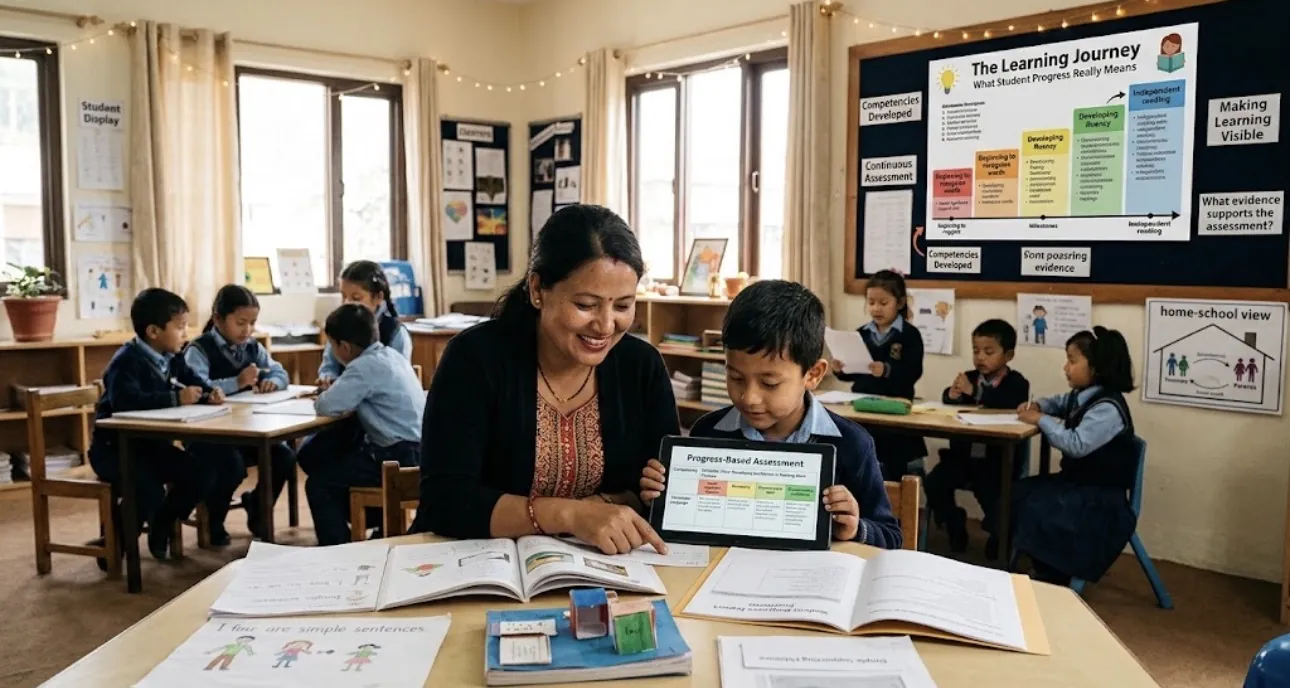
Progress Is More Than a Final Grade
A final grade can tell us how a student performed at a particular point in time. But it does not always tell the full story of how that child learned, improved, practiced, struggled, and developed new skills.
For young learners, especially students in Grades 1–5, progress is much more than a number, letter, or final result.
Children develop different competencies at different speeds. One student may become confident in speaking before becoming comfortable with writing. Another may understand a mathematical concept but need more practice applying it independently.
This is why continuous assessment is important.
Instead of looking only at the final result, continuous assessment helps teachers, students, and parents understand what a child can do, what they are currently learning, and what they should work on next.
The goal is not to create more pressure around assessment. The goal is to make learning more visible.
What Does Student Progress Really Mean?
Student progress is about the development that happens over time.
For example, a child may begin the school year by recognizing simple words. After regular classroom activities and practice, the same child may be able to read short sentences independently.
The final result might show a score or rating. But real progress includes:
What the child could do before
What the child can do now
Which competency has improved
What evidence supports the assessment
Where the child still needs support
What the next learning milestone should be
This broader view gives parents a much clearer understanding of their child’s learning journey.
Progress should answer a simple question: How is my child developing?
Why Final Grades Are Not Enough
Final grades are useful, but they are only one part of the assessment picture.
Imagine a student receives a rating of 3 out of 4 in reading. A parent may naturally ask, “What does 3 mean?”
Does the child read independently? Can they understand what they read? Do they need help with new words? Are they improving compared with earlier assessments?
Without additional information, the number does not provide much context.
A competency-based assessment approach can make results easier to understand by connecting ratings to clear descriptors and evidence.
For example:
Rating
Simple Description
1
Needs significant support
2
Developing the skill
3
Demonstrates the skill well
4
Demonstrates the skill confidently and independently
The exact descriptors can be adapted to the school’s assessment framework, but the principle remains the same: parents should understand what an assessment means, not just see the score.
Parents Need to See the Competencies Being Developed
Young children are constantly developing new skills.
In a classroom, these competencies may include:
Listening
Speaking
Reading
Writing
Vocabulary
Language structure
Problem-solving
Collaboration
Communication
Practical application
A student progress report becomes more meaningful when it shows these areas clearly.
Instead of simply saying:
English: 75%
A parent could see:
Reading: Developing confidence in reading short passages.
Speaking: Communicates ideas clearly in familiar situations.
Writing: Can write simple sentences with some support.
Next milestone: Improve sentence structure and independent writing.
This information is much easier for families to understand and discuss with their children.
Evidence Makes Assessment More Meaningful
A rating becomes more useful when it is connected to evidence.
Evidence does not always mean a formal examination. In formative assessment, teachers can collect evidence through everyday classroom activities.
This may include:
Classroom observation
Student participation
Oral responses
Reading activities
Writing samples
Practical tasks
Projects
Assignments
Presentations
Demonstrations
Classwork
For example, a teacher may observe that a student can explain an idea verbally but struggles to write the same idea independently.
That observation is valuable evidence.
It helps the teacher understand the difference between what the child knows and what the child can independently demonstrate.
A Shared Progress View Connects Home and School
Parents and teachers have different perspectives on a child’s learning.
Teachers see children in the classroom. Parents see them at home and in everyday situations.
When both sides have access to a clear student progress report, communication becomes more constructive.
Parents can ask better questions:
What skill is my child currently developing?
What has improved since the previous assessment?
Where does my child need more practice?
What can we do at home?
What is the next learning milestone?
This creates a partnership rather than making assessment feel like a judgment.
The conversation changes from:
“Why did my child get this grade?”
to:
“How can we help my child progress?”
That is a much healthier approach to education.
Clarity Builds Trust
Assessment can sometimes feel complicated for families.
Different schools may use different terms, grading systems, rubrics, and reporting formats. If parents do not understand the language used in a report, even a good assessment system can become confusing.
This is why clear assessment language matters.
Schools can improve understanding by using:
Simple descriptions
Consistent terminology
Clear competency indicators
Easy-to-understand rubrics
Regular progress updates
Specific teacher remarks
Examples of student evidence
Consistency is particularly important.
If a rating means one thing in one assessment and something completely different later, parents may lose confidence in the system.
A clear and consistent assessment rubric gives teachers and parents a shared language for discussing learning.
Timely Updates Are Better Than Waiting Until the End
One of the biggest advantages of continuous assessment is that teachers do not have to wait until the end of a term to identify learning difficulties.
Regular updates can show whether a student is progressing, maintaining their current level, improving, or needing additional support.
If a child is struggling with a particular competency, early identification gives the school an opportunity to provide support.
Parents can also reinforce simple practice at home.
For example, if a child needs more reading practice, parents can spend a few minutes reading together each day. If the child needs support with vocabulary, families can introduce new words through conversations, stories, or daily activities.
Small and regular support can make a meaningful difference.
Progress Should Encourage, Not Pressure
Assessment should help children learn, not make them afraid of mistakes.
This is especially important in the primary years.
A child who receives a lower rating should not feel that they have failed. Instead, the assessment should help identify the next step.
For example:
Current level: Developing independent reading.
Evidence: Reads familiar sentences but needs help with unfamiliar words.
Next milestone: Read a short paragraph independently.
This approach makes assessment more positive.
The message becomes:
“Here is where you are, and here is where you can go next.”
That mindset supports confidence and encourages children to keep learning.
How Schools Can Improve Progress Reporting
Schools can make student progress easier to understand by designing reports around learning rather than only grades.
A useful progress report can include:
1. Competencies
Show the specific skills or learning outcomes being assessed.
2. Current Rating
Provide the student’s current level using a clear and consistent rubric.
3. Evidence
Briefly explain what the student demonstrated.
4. Teacher Remarks
Give practical comments about strengths and areas for improvement.
5. Next Milestone
Clearly identify what the student should work toward next.
6. Parent Support
Where appropriate, provide simple suggestions for practice at home.
Together, these elements create a more complete picture of student development.
Technology Can Make Progress Easier to Track
Modern school assessment systems can help teachers record progress throughout the year rather than preparing everything at the end of a term.
A digital continuous assessment system can organize student profiles, competencies, assessment rubrics, teacher observations, evidence, scores, ratings, teacher remarks, term-wise progress, and student reports.
The important point is that technology should support the assessment process rather than make it more complicated.
Teachers should be able to record information quickly, while parents should be able to understand the results easily.
The Bigger Goal: Understanding Learning
Education is not simply about producing a final grade.
A grade can summarize performance, but progress explains development.
When parents can see the competencies their child is developing, understand the evidence behind an assessment, and know the next milestone, they can become more active partners in education.
For Grades 1–5, this is especially valuable because children are building the foundations for future learning.
A good continuous assessment system does not ask only:
“What grade did the student receive?”
It also asks:
“What has the student learned?”
“What has improved?”
“What still needs support?”
And most importantly:
“What should the student learn next?”
When schools answer these questions clearly, assessment becomes more than a reporting exercise. It becomes a useful part of the learning journey.
Final Thoughts
Progress is more than a final grade.
When assessment focuses on growth, children get a clearer path for improvement, teachers get better information for instruction, and parents get a more meaningful view of learning.
Clear language, consistent descriptors, useful evidence, and timely updates can build trust between home and school.
Most importantly, they can help everyone focus on what truly matters: helping every child continue to learn, improve, and reach the next milestone.