
School Improvement Plan (SIP): 5 Strategies to Improve Student Learning
15 October 2026
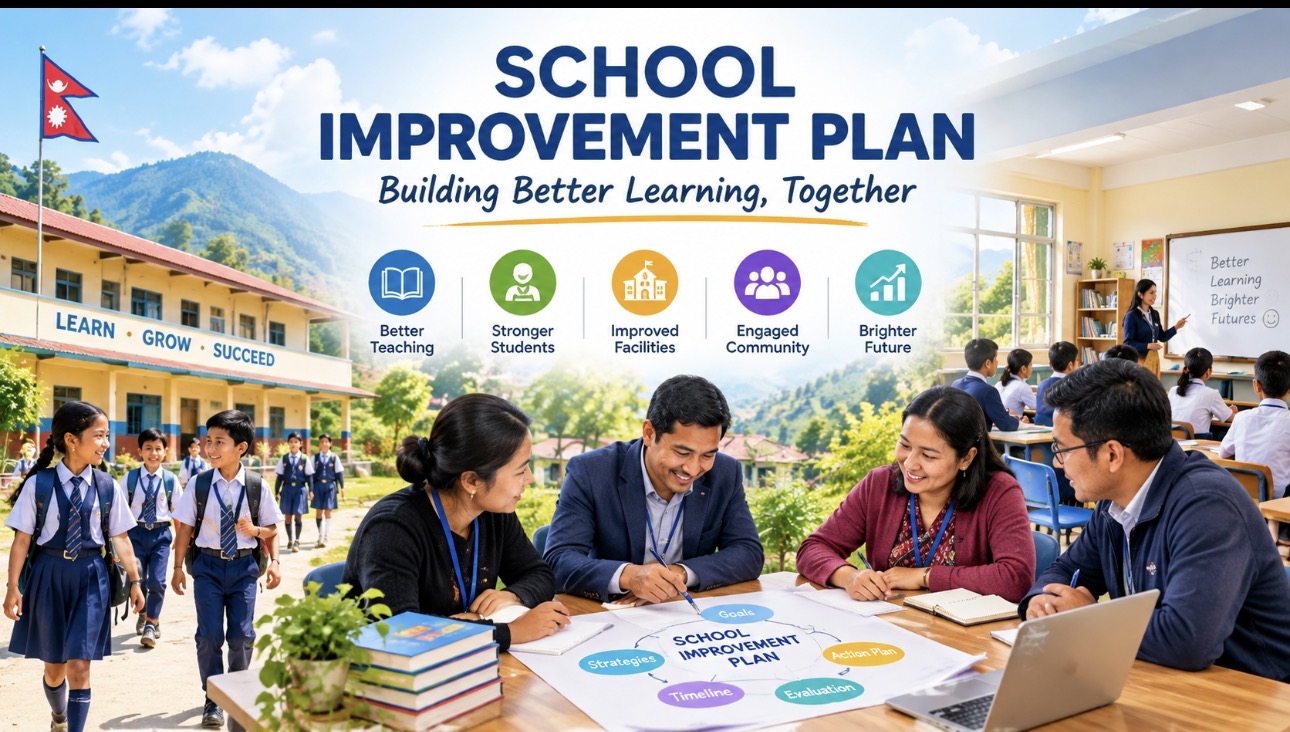
Why Every School Needs an Improvement Plan
Every school wants its students to learn better, its teachers to perform confidently, and its classrooms to become more effective. However, achieving these goals requires more than good intentions. Schools need a clear plan, shared responsibilities, and regular follow-up.
A School Improvement Plan (SIP) is a practical document that helps a school identify its challenges, set achievable goals, and decide what actions are needed to improve learning outcomes. It connects a school’s current situation with the results it wants to achieve.
An effective SIP should not simply be prepared to complete an administrative requirement. It should guide everyday decisions, from classroom teaching and student assessment to teacher development and parent involvement.
The approach discussed in Instructional Empowerment’s guide to school improvement goals and strategies highlights the value of clear goals and practical actions. Schools can build on this idea by creating an improvement plan that reflects their students’ actual needs, available resources, and local circumstances.
For schools in Nepal, the official School Improvement Planning Development Guide, 2080 from the Center for Education and Human Resource Development (CEHRD) is also an important reference.
Let’s look at five practical strategies that can make a School Improvement Plan more useful and effective.
What Is a School Improvement Plan (SIP)?
A School Improvement Plan is a structured plan that outlines a school’s priorities, improvement targets, activities, responsibilities, timelines, and methods for measuring progress.
Depending on the school’s needs, an SIP may focus on:
Improving student learning outcomes
Strengthening classroom teaching practices
Supporting students who are falling behind
Improving attendance and student participation
Developing teachers’ professional skills
Increasing parent and community involvement
Making school management more effective
Improving the use of school resources
A good SIP begins with evidence rather than assumptions. Before deciding what to improve, school leaders and teachers need to understand what is working, where students are struggling, and what support is available.
5 Practical Strategies to Improve Your School Improvement Plan
1. Share Leadership and Involve Teachers
School improvement should not depend on the headteacher alone. Although school leaders play an important role, teachers are the people who work directly with students and understand many of their daily learning challenges.
An effective SIP gives teachers a meaningful role in identifying problems, suggesting solutions, and reviewing progress.
For example, a school may discover that many Grade 3 students struggle with reading comprehension. Instead of asking the headteacher to solve the problem independently, the school can involve language teachers, grade-level coordinators, and other relevant staff.
Together, they can identify possible causes and develop a realistic plan.
Practical actions:
Create an SIP committee with clearly defined responsibilities.
Invite teachers to share classroom challenges and suggestions.
Assign a responsible person to every major improvement activity.
Give teachers opportunities to review results and recommend changes.
Share progress with staff so everyone understands the school’s priorities.
When teachers feel involved in decisions, the improvement plan becomes a shared responsibility rather than another document prepared by the administration.
2. Use Regular Assessment to Understand Student Progress
A school cannot improve learning effectively without understanding what students have learned.
Exam results can provide useful information, but they do not always show the full picture. Regular classroom assessment helps teachers identify learning difficulties before they become bigger problems.
For primary schools, continuous assessment is especially valuable because students develop skills at different rates. A child may understand a topic well but need additional help with reading, writing, communication, or problem-solving.
Teachers can use classroom observations, exercises, student work, oral questions, and learning indicators to understand progress.
Schools in Nepal can explore our guides on continuous assessment for Grades 1–5 and this practical guide to continuous assessment to learn more about connecting assessment with everyday teaching.
Practical actions:
Identify the essential learning outcomes for each grade.
Review student progress regularly rather than waiting until the end of a term.
Record learning gaps and provide additional support where needed.
Check whether the additional support is helping students improve.
Use assessment findings when setting school improvement targets.
For example, if a school finds that 30% of its Grade 4 students are struggling with multiplication, it can set a measurable target to reduce that percentage through focused classroom activities and regular progress checks.
The figures in this example are illustrative. Each school should establish targets based on its own assessment results and available resources.
The aim is not simply to collect more assessment records. It is to use the information to make better teaching decisions.
3. Build Clear Systems and Document Important Processes
School improvement becomes difficult when important activities depend entirely on individual memory or informal communication.
A school may have dedicated teachers and capable leaders, but without clear systems, tasks can be missed, responsibilities can become confusing, and progress may be difficult to measure.
An SIP should therefore establish simple, consistent procedures for the school’s priority activities.
These might include classroom assessment, student attendance, teacher meetings, parent communication, remedial support, and progress reporting.
Practical actions:
Maintain clear records of improvement activities.
Use a shared calendar for important deadlines and meetings.
Document who is responsible for each task.
Establish a consistent process for reviewing student progress.
Keep records of decisions, actions, and follow-up results.
Technology can make these processes easier. Digital school systems may help organize student information, assessment records, attendance, and reports in one place.
However, schools should choose tools that match their needs and resources. A simple, well-maintained system is often more useful than an expensive platform that staff find difficult to use.
For schools working to improve classroom assessment, CAS Nepal provides information about continuous assessment and digital assessment practices for primary education.
The goal is to make school processes easier to follow, not to create unnecessary paperwork.
4. Support Teachers Through Regular Feedback and Professional Development
Teachers need opportunities to reflect on their teaching, learn new approaches, and receive constructive feedback.
A School Improvement Plan should therefore include teacher development as part of its wider effort to improve student learning.
Professional development does not always require expensive training programs. Schools can begin with activities that make use of the knowledge and experience already available among their staff.
For example, teachers can observe one another’s classes, discuss effective teaching methods, share lesson plans, and work together to address common student difficulties.
Practical actions:
Organize short, regular teacher learning sessions.
Encourage teachers to share successful classroom practices.
Provide constructive feedback based on classroom observations.
Identify training needs using student performance and teacher feedback.
Review whether professional development is improving classroom practice.
Feedback should be specific, respectful, and focused on improvement. Instead of simply telling a teacher to improve student performance, school leaders can work with the teacher to identify a particular challenge and agree on practical next steps.
For instance, if students are struggling to participate in classroom discussions, teachers can explore questioning techniques, group activities, and other ways to encourage participation.
The school can then review student engagement to see whether the changes are helping.
5. Hold Regular Progress Meetings and Track Actions
An SIP is useful only when its activities are implemented and reviewed.
Many school plans begin with enthusiasm but lose momentum because no one checks whether the agreed activities are taking place. Regular progress meetings help keep the plan active and give the school an opportunity to respond when something is not working.
These meetings do not need to be long. A focused discussion about progress, challenges, and next steps can be enough.
Practical actions:
Schedule regular SIP review meetings.
Compare current progress with the original targets.
Identify activities that are delayed or need additional support.
Record decisions and assign follow-up responsibilities.
Adjust activities when evidence shows that the current approach is ineffective.
For example, a school working to improve reading skills could review student assessment records each month. If students are not making the expected progress, teachers can discuss the possible reasons and change their teaching approach where necessary.
This process makes responsibilities clear and helps school leaders identify problems before they become difficult to manage.
How to Prepare a School Improvement Plan Step by Step
Schools do not need to make the planning process complicated. A practical SIP can be developed through a series of clear steps.
Step 1: Assess the Current Situation
Begin by understanding the school’s strengths and weaknesses. Review student learning, attendance, teaching practices, available resources, parent participation, and existing school processes.
Use school records, teacher observations, student work, and feedback from parents and the community where appropriate.
Step 2: Identify the Most Important Problems
Avoid trying to solve every problem at once. Select a small number of priorities that have the greatest effect on student learning and school performance.
For example, a school may decide to focus first on reading skills, student attendance, and classroom assessment.
Step 3: Set Specific and Measurable Goals
Every priority should have a clear target.
Instead of writing, “Improve student learning,” a school might set a target such as:
“Increase the percentage of Grade 4 students meeting the school’s reading proficiency criteria from 60% to 80% by the end of the academic year.”
The figures in this example are illustrative. Schools should use their own baseline data and realistic targets.
Step 4: Plan Activities and Assign Responsibilities
Decide which actions will help achieve each target, who will lead them, what resources are needed, and when the work should be completed.
Teachers and other relevant staff should understand their responsibilities before implementation begins.
Step 5: Monitor Progress and Review Results
Use appropriate evidence to check whether the activities are producing the expected results.
If progress is slower than expected, investigate why. The school may need to adjust teaching methods, provide additional resources, or offer more support to teachers and students.
A strong SIP is a working plan that can be improved as the school learns more.
Example of a School Improvement Plan in Practice
Imagine a community school that wants to improve reading skills, student attendance, and classroom assessment.
The school begins by reviewing its current records and discussing the main challenges with teachers. It then sets realistic targets based on the results.
For reading, teachers introduce daily reading activities and assess students regularly. For attendance, the school follows up on frequent absences and communicates with parents. For continuous assessment, teachers agree on a consistent schedule for recording and reviewing student progress.
Each activity has a responsible person and a timeline. During monthly meetings, the school reviews the evidence and decides whether any changes are needed.
The school does not have to purchase expensive technology or introduce a large number of new programs. By focusing on a few priorities and following through consistently, it can make its improvement plan more practical.
The targets and timelines should always reflect the school’s actual situation rather than being copied from another school.
Common Mistakes to Avoid When Preparing an SIP
Even a well-written plan can fail if the school does not implement it properly. Some common mistakes include:
Setting goals that are too broad. General statements such as “improve education quality” do not explain what needs to change or how success will be measured.
Creating unrealistic targets. Goals should be ambitious but achievable with the school’s available resources and support.
Ignoring teachers’ experiences. Teachers understand many of the challenges students face in the classroom. Their input can help make improvement activities more practical.
Collecting data without using it. Assessment records are valuable only when they help teachers and school leaders make decisions.
Failing to review progress. Without regular follow-up, the school may not know whether its activities are working.
Treating the SIP as a one-time document. School improvement requires ongoing reflection, action, and adjustment.
Schools in Nepal should also consider the wider policy and classroom context. Our article on the gap between CAS policy and classroom practice explores an issue that can be relevant when schools plan to strengthen student assessment.
The Role of Technology in School Improvement
Technology can help schools organize information, monitor progress, and communicate more effectively. Digital tools may reduce repetitive paperwork and make it easier to access assessment records when decisions need to be made.
For example, a school may use a digital system to record student learning progress, identify students who need additional support, prepare reports, and review progress over time.
However, technology should support a school’s improvement goals rather than become a goal of its own.
Before adopting a digital tool, schools should consider its cost, ease of use, data privacy, staff training requirements, and suitability for their existing processes.
In primary education, technology is particularly useful when it helps teachers understand individual student needs and plan appropriate learning support.
Schools interested in this area can learn more about how CAS Nepal makes continuous assessment easier.
Why Parent and Community Involvement Matters
School improvement is more effective when teachers, school leaders, parents, and the wider community work together.
Parents can share information about children’s learning habits, attendance challenges, and support needs. Schools can help parents understand learning goals and explain how they can support their children at home.
Community involvement can also help schools identify local challenges and make better use of available resources.
For example, if students frequently miss school because of transportation difficulties or family responsibilities, the school may need to understand those circumstances before deciding on an appropriate response.
Communication should be respectful and focused on solutions rather than blame.
Read more about building a stronger learning partnership with parents for ideas on strengthening cooperation between schools and families.
Frequently Asked Questions About School Improvement Plans
1. What is the main purpose of a School Improvement Plan?
The main purpose of a School Improvement Plan is to help a school identify its priorities, set measurable goals, organize improvement activities, and monitor whether those activities are improving teaching and student learning.
2. Who is responsible for preparing an SIP?
The school leadership team usually coordinates the process, but an effective SIP should involve teachers and, where appropriate, parents, school management representatives, and community stakeholders. Responsibilities should be clearly assigned.
3. How often should a School Improvement Plan be reviewed?
Schools should review progress regularly, such as monthly or at another suitable interval, and conduct broader reviews at key points during the academic year. The schedule should reflect the school’s priorities and applicable guidelines.
4. What should a good SIP include?
A good SIP generally includes an assessment of the school’s current situation, priority areas, measurable targets, planned activities, responsible persons, timelines, required resources, and indicators for monitoring progress.
5. How can schools measure whether an SIP is successful?
Schools can review student learning outcomes, attendance, classroom assessment records, teaching practices, parent participation, and progress toward agreed targets. The measures should be relevant to the school’s original goals.
6. How does continuous assessment support a School Improvement Plan?
Continuous assessment helps teachers understand what students have learned and where they need additional support. Schools can use this evidence to set realistic learning targets, plan teaching activities, and monitor whether students are progressing.
For more information, read the CAS Nepal guide to continuous assessment for Grades 1–5.
7. Is a School Improvement Plan useful for small community schools?
Yes. A small community school can create a useful SIP with a few clear priorities, simple records, realistic targets, and regular staff discussions. An effective plan does not have to be expensive or complicated.
8. Is technology necessary for implementing an SIP?
No. Schools can implement an SIP using paper-based records and regular meetings. Digital tools may make some tasks easier, but the most important factors are clear goals, consistent action, reliable evidence, and regular follow-up.
Conclusion: Turn Your School Improvement Plan Into Action
A School Improvement Plan is most effective when it becomes part of everyday school practice. Writing a document is only the beginning. Real improvement happens when teachers and school leaders identify learning needs, agree on practical actions, monitor progress, and make changes when necessary.
The five strategies in this guide provide a useful starting point: share leadership, use regular assessment, build clear systems, support teachers, and review progress consistently.
Schools do not need to change everything at once. Starting with a few important priorities and following through on them can produce meaningful progress over time.
For schools in Nepal, connecting improvement planning with classroom evidence and continuous assessment can help ensure that decisions remain focused on students’ actual learning needs.
Explore CAS Nepal for additional resources on continuous assessment, primary education, and practical ways to support student learning.
A successful School Improvement Plan is not measured by how many pages it contains. It is measured by the positive changes students and teachers experience in their classrooms.